



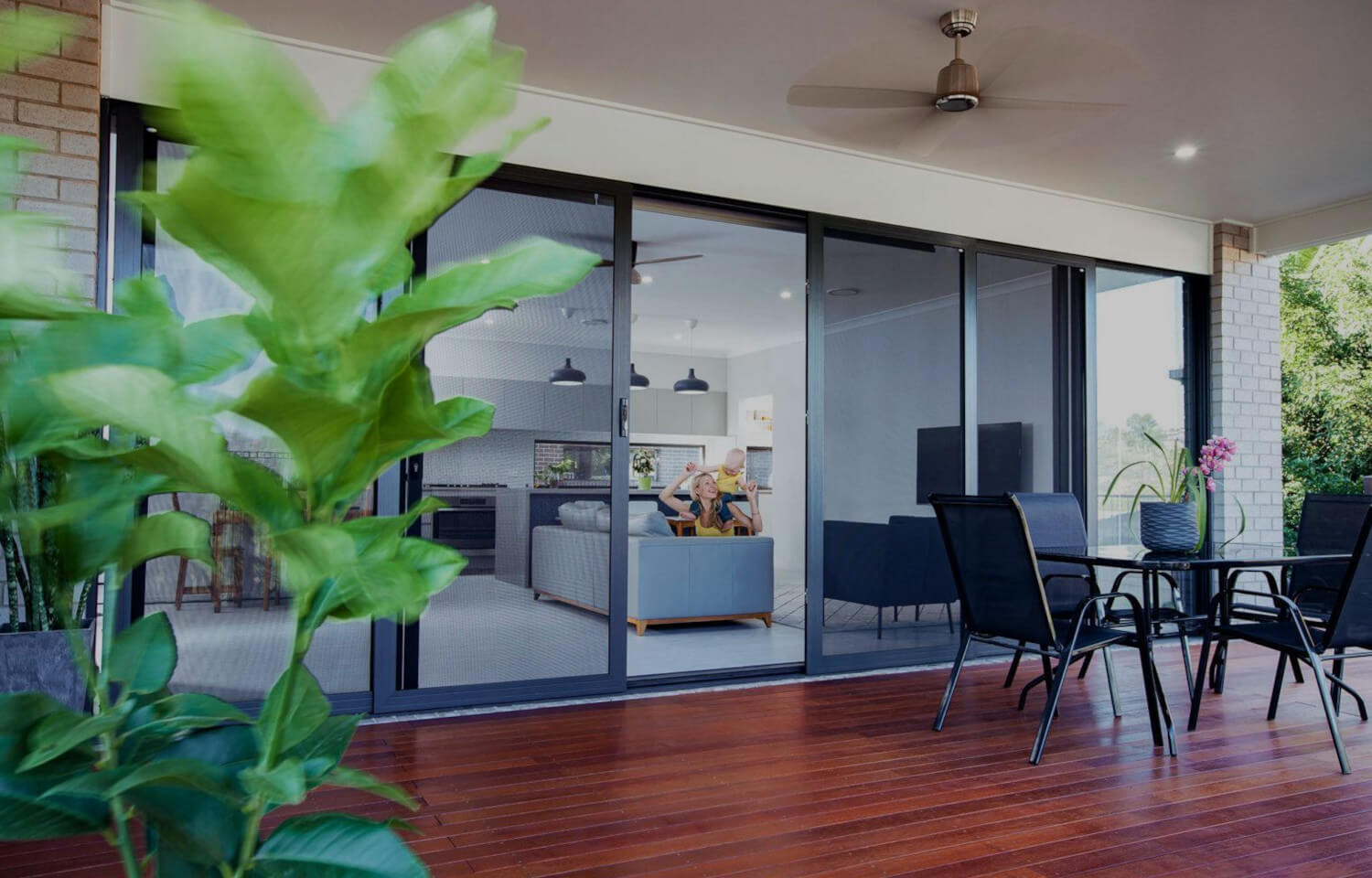
Crimsafe works on Gold Coast apartments and townhouses exactly as it does on a house: same stainless steel mesh, same Screw-Clamp system, same custom fit. The difference is that you’ll usually need body corporate approval first, and we can help you get it. If you’ve just moved into a new unit or townhouse and you’re already eyeing off that balcony door, you’re far from the only one.
The good news is that this extra step is usually more straightforward than it sounds. Here’s what to expect, in the order you’ll come across it.
Apartment and townhouse security at a glance
Why Apartments and Townhouses Need a Different Approach to Security
In a house, the doors and windows are yours to change. In an apartment or townhouse, you’re part of a community titles scheme, so some of what’s around you belongs to everyone and is looked after by the body corporate.
There’s also a common assumption worth clearing up. Being a few floors up doesn’t mean nobody can get in. The Queensland Police Service notes that many high-rise break-ins happen through open or unlocked balcony doors, and that living several floors up doesn’t offer absolute security. Most break-ins are opportunistic, which means the easiest opening tends to get tried first.
House vs apartment vs townhouse
| House | Apartment | Townhouse | |
|---|---|---|---|
| Who controls the doors and windows | You | Often the body corporate, as common property | Often you, depending on the scheme |
| Body corporate approval | Not needed | Usually needed | Often needed for changes to the look |
| Main openings to secure | Every door and window | Balcony sliding doors and windows | Courtyard, back and side doors |
| Where we usually start | A full home quote | The balcony door | Ground-level doors and windows |
Queensland Police tip: keep your balcony screen doors locked, even when you’re home and at night. So the goal is the same as in any home: leave the glass open for the sea breeze without leaving the door open to anyone else.
Body Corporate Approval: What to Check Before You Book
You don’t need to become a strata expert. You just need to know what your scheme asks for, and have the right details in hand when you ask.
Start by asking your body corporate manager two questions:
While you wait to hear back, book your free measure and quote. Once we’ve been out, we can give you what committees usually want to see:
If your committee has questions about the product, we’re happy to talk to them directly.
Lot Property vs Common Property in Queensland Schemes
Whether you need approval often comes down to who owns the outside of your doors and windows, and that depends on how your scheme was set up.
In most apartment buildings, the boundary of your lot is the walls, floor and ceiling, so the outside face of your doors and windows can count as common property. In many townhouse complexes, the boundaries are set differently, and owners are often responsible for their own exterior. A Queensland body corporate lawyer, answering an owner on LookUpStrata who wanted Crimsafe on every door and window, said improvements within a lot are governed by the by-laws, and that the key thing to check is whether your doors and windows form the lot boundary.
| Typical apartment building | Typical townhouse complex | |
|---|---|---|
| Where your lot boundary usually sits | The walls, floor and ceiling of your unit | Set by the survey, often including the building |
| Outside face of doors and windows | Can be common property | Often part of your lot |
| Who is often responsible for the exterior | The body corporate | The owner |
| What to check | By-laws and whether approval is needed | By-laws on appearance and colour |
If you’re unsure, your body corporate manager can tell you, or you can find general information through the Office of the Commissioner for Body Corporate and Community Management.
Keeping a Consistent Look Across the Building
Most committees care about appearance more than anything. Nobody wants a building with six styles of screen in six different colours.
Because Crimsafe is made to measure, matching an existing look is straightforward. Our accessories are colour-matched too, so the finished screens look like they belong to the building.
Securing Balcony Sliding Doors on Upper Floors
The balcony door is usually the biggest opening in an apartment, and the one most often left open. A Crimsafe sliding security door lets you keep the glass open day and night while the screen stays locked.
We fit sliding doors with a heavy-duty interlock 25.4mm deep, compared with a standard 13mm, and add tracks where needed so the door keeps running smoothly.
Sliding door interlock depth compared
Standard interlock
13mm
Securelux heavy-duty interlock (almost double the depth)
25.4mm
Wide balconies are no problem
We fit stacker doors in these setups:
Ground Floor Units and Townhouse Courtyards
Ground floor units and townhouses have more in common with a house than a tower. Courtyards, side gates and back doors that open onto shared paths are all easy ways in. These are where we usually start:
Got a dog who lives for that courtyard? A pet door can be built into a security screen, so they can come and go without the door being left open.
Window Fall Prevention for Families in Multi-Storey Homes
If you’ve got young kids, upstairs windows are a genuine worry. For new buildings, the National Construction Code requires certain windows to limit openings to 125mm, such as bedroom windows more than 2m above the ground outside. Most existing Queensland buildings don’t have to retrofit, and owners are generally responsible for the windows on their own lot.
Crimsafe security screens are used for child fall prevention on windows, so you can open the glass for airflow while the screen stays fixed in place. At your consultation, we’ll look at each window and talk through the options that suit it.
The National Construction Code rule for new bedroom windows, in short
| Rule | What it means |
|---|---|
| Fall height of 2m or more | Applies to bedroom windows where the floor is 2m or more above the ground below |
| Opening within 1,700mm of the floor | These openings need protection |
| 125mm maximum opening | A restrictor or screen must stop a 125mm sphere passing through |
| 250N outward force | The restrictor or screen must resist an outward force of 250 newtons |
This applies to new buildings. If you’re unsure about yours, your body corporate manager is a good place to start.
Safe-S-Cape Options Where an Escape Route Is Needed
Securing an apartment should never make it harder to get out in a fire. Where an opening needs to double as an escape route, Crimsafe Safe-S-Cape screens are designed to be opened from the inside. Each one is sized to the opening.
Coastal Exposure on Gold Coast Balconies
Ocean-facing balconies cope with salt spray, humidity and wind-driven rain. Crimsafe’s stainless steel mesh resists corrosion, and we put Saltwater Series gel on every clamp screw to help protect the fittings.
A rinse with fresh water and a wipe-down now and then keeps everything looking good and helps maintain your warranty.
Renters, Landlords and Approval Requests
Renting? You’ll need your landlord’s approval first. In Queensland, tenants ask using the Residential Tenancies Authority’s Form 23 to attach fixtures. The owner or property manager has 28 days to respond, and if the body corporate needs to approve it too, they pass the request on.
Good to know
Own an investment unit? Good screens on the balcony door and windows can be a real drawcard for tenants who want to feel safe, especially families.
Measuring and Installing in Buildings with Access Rules
Many Gold Coast buildings have rules about how trades work on site. Let us know your building’s rules when you book, and we’ll plan around them:
It’s our own team who’ll turn up on the day, so the people who’ve agreed to your building’s rules are the people doing the work.
How a unit or townhouse job usually runs
Choosing the Right Crimsafe Range for Your Apartment
Crimsafe is a range, not one product. A ground-floor courtyard door and a tenth-floor bedroom window don’t always need the same level, and we’ll tell you honestly which suits each one.
| Crimsafe range | What it offers | Often suits |
|---|---|---|
| Crimsafe First | An entry point into genuine Crimsafe protection | Openings where budget matters most |
| Crimsafe Regular | Solid security for everyday openings | Most doors and windows |
| Crimsafe Ultimate | The highest level of impact resistance | Larger openings or extra peace of mind |
As a guide, the final price depends on the range, the size of each opening, what the installation involves, and the frame colour.
Book Your Free Crimsafe Consultation on the Gold Coast
Securelux is a family-owned Queensland business with over 40 years in the industry, a Crimsafe Authorised Licensee, an NSSA member, and QBCC licensed (1187294). On the Gold Coast, we cover:
Call 1300 11 51 51 or book a free consultation online. If your body corporate wants to know more before they say yes, send them our way.



Leave A Comment