




Saltwater Series gel is a protective gel that Securelux’s manufacturing team applies to every clamp screw on our Crimsafe security screens, adding a barrier against the salt and moisture that drive corrosion in coastal homes. If you live in a bayside or coastal suburb, you’ve probably already watched salt air chew through cheaper screens, hinges and fittings far faster than you expected. And if you’ve ever asked yourself whether new screens will rust or stain this close to the water, it’s a fair question that deserves a straight answer.
The short version is that good stainless steel mesh holds up well near the water. The parts that tend to let you down are the small ones: the screws, the fittings, and the places salt can sit and stay wet.
The quick answer
- Salt plus moisture is the problem. Near the coast, a salty film sits on your screens for much of the year.
- Clamp screws are the weak point. They’re where two different metals meet and where salt and water can collect.
- Saltwater Series gel adds a barrier. We apply it to every clamp screw on every Crimsafe screen we build, at no extra cost.
- Regular cleaning does the rest. The closer you are to the water, the more often your screens need a wash.
5 km
Tea staining is most common within about 5km of the surf
1 km
The equivalent range from still marine water
20+ km
How far wind and heat can push the risk inland
2x
Corrosion rates roughly double for every 10°C rise
Figures from the Australian Stainless Steel Development Association (ASSDA).
What Salt Air Does to Security Screens Near the Coast
Airborne sea salt settles on every surface near the coast. Salt draws moisture out of the air, so that film stays damp and keeps working on a surface even on days that feel fairly dry. Add Queensland heat and humidity, and you get a thin layer of salty moisture sitting on your screens for much of the year. Heat matters more than most people think: ASSDA notes that corrosion rates roughly double for every 10°C rise in temperature, which is one reason warm coastal climates are harder on metal.
On cheaper products, that film attacks painted frames, plain steel hardware and low-grade fasteners. The result is rust stains, bubbling paint, and fittings that seize. On quality stainless steel, the risk shows up differently, mostly as surface discolouration, which is covered further down.
Where Corrosion Starts on a Security Screen
Every part of a screen faces the same salty air, but not every part handles it the same way.
| Part of the screen | Why it’s at risk | How Securelux protects it |
|---|---|---|
| Clamp screws | Two different metals meet, and threads and gaps trap salt and moisture | Saltwater Series gel on every clamp screw |
| Stainless steel mesh | Can trap salt and grime, which may show as tea staining | Genuine Crimsafe stainless mesh, plus a cleaning schedule for your area |
| Hinges, locks and fittings | Low-grade hardware stains or seizes long before the infill gives out | Heavy-duty accessories on every installation |
| Powder-coated frame | Scuffs from abrasive cleaners expose the surface underneath | Colour-matched accessories and advice on gentle cleaning |
Why Clamp Screws Are a Common Corrosion Weak Point
On a Crimsafe screen, the stainless steel mesh is held into an aluminium frame by the Screw-Clamp system, using tamper-resistant stainless steel screws. That clamp is what gives Crimsafe its strength.
But wherever two dissimilar metals touch and salty water is present, you create the conditions for galvanic corrosion. Here’s how it plays out:
01
Two metals meet
Stainless steel screws sit against an aluminium frame.
02
Salt water bridges them
Salty moisture acts a bit like the liquid in a battery.
03
The weaker metal corrodes
The less noble metal, usually the aluminium, can start to corrode at the contact point.
04
The gel breaks the bridge
Saltwater Series gel makes it harder for salt water to reach and connect the two metals.
Screw threads and the small gaps around them also trap moisture and salt, and crevices like these are where corrosion likes to start. The screw points are tiny, but if they go, the clamp goes with them.
That’s also why corrosion near the coast often shows up at the fittings first. Hinges, lock hardware and fixings on cheaper doors tend to stain or seize long before the infill gives out, so the quality of the small parts matters as much as the mesh you can see.
What Saltwater Series Gel Is and Where Securelux Applies It
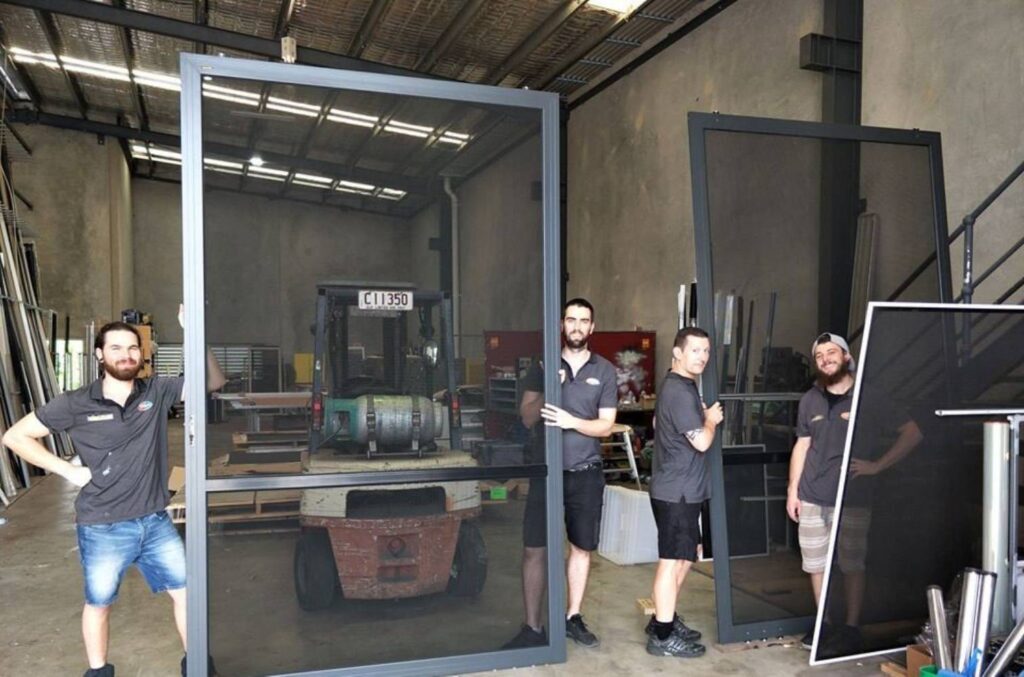
Saltwater Series gel is applied by our manufacturing team to every clamp screw on the screens we build, as part of how we make every Crimsafe product, not as an optional extra. Protective gels of this kind work by filling the gaps around the fastener and forming a physical barrier, so salt water has a harder time reaching the metal surfaces or bridging the two metals.
- Where: every clamp screw on every Crimsafe screen, door and window we manufacture
- When: during manufacture, before your screens leave our team
- Cost: included as standard, not an add-on
- Effort for you: none, it’s already done when your screens are installed
It’s a small step that most customers never see, which is exactly the point. You get the benefit every time the sea breeze rolls in, without having to do anything differently.
How Crimsafe’s Stainless Steel Mesh Resists Corrosion
Crimsafe mesh is made from 0.9mm Tensile-Tuff 304 grade structural stainless steel on Regular and Ultimate, and 0.8mm stainless steel on Crimsafe First. Stainless steel resists corrosion because of a thin, self-repairing layer on its surface that protects the metal underneath. Crimsafe’s published specifications also include 3,000 hours of prohesion salt spray and cyclic testing, which Crimsafe equates to about 30 years of exposure to the elements.
That said, Crimsafe is upfront that its mesh traps dirt and impurities, a bit like an air conditioner or pool filter, and needs regular cleaning. Stainless steel is low maintenance, not no maintenance. A bit of regular care keeps that protective layer doing its job.
Tea Staining Explained and Why It Appears on Coastal Homes
Tea staining is the brown discolouration you sometimes see on stainless steel near the coast. ASSDA defines it as discolouration of the surface of stainless steel caused by corrosion.
The good news is that ASSDA describes tea staining as a cosmetic issue that doesn’t affect the structural integrity or lifetime of the material. Still, nobody spends good money on a new screen door to have rust-coloured streaks running down it.
Staining is more likely on surfaces that are sheltered from rain, such as screens under deep eaves or patio roofs. Rain is a natural cleaner, so sheltered screens usually need washing more often than exposed ones.
| Brown marks on your screen | Likely cause | What to do |
|---|---|---|
| Even light-brown film, worst in sheltered spots | Tea staining | Clean more often for your exposure band |
| Small rust spots or specks | Particles of ordinary steel left on the surface | Stop using steel wool or shared cloths, then clean gently |
| Streaks running from fittings | Corroding hardware or fasteners | Call us on 1300 11 51 51 to take a look |
How Close to the Water Counts as a Marine Environment
The coast reaches further inland than most people think. ASSDA notes tea staining is most likely within about 5km of a surf beach and 1km of still marine water, but wind, pollution, sheltering and heat can push the risk out to 20km or more. Crimsafe uses its own distance bands, which shape the cleaning schedule below.
For Redlands and bayside Brisbane homeowners, there’s a wrinkle: Moreton Bay is a sheltered bay, so Crimsafe’s marine distances are shorter there than they are for open surf beaches. ASSDA also notes that in sheltered waters, corrosion rates drop off within a few hundred metres. A home a few hundred metres from the bay can sit in a different band to a Gold Coast home the same distance from a surf beach.
How Often to Clean Your Screens Based on Distance from the Coast
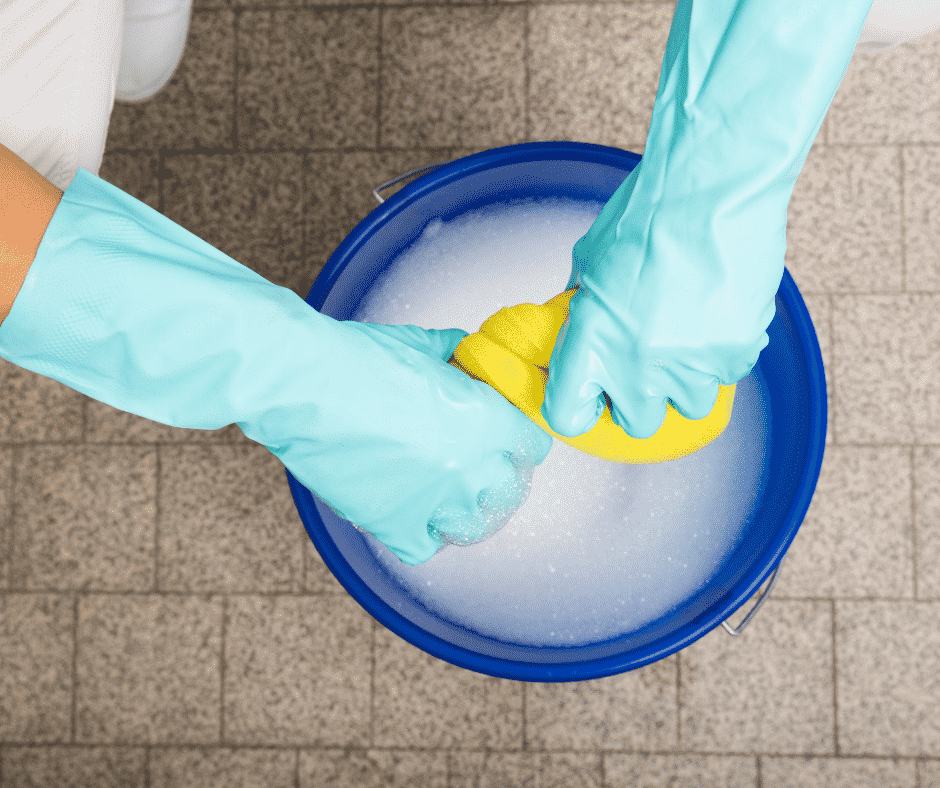
Crimsafe sets its recommended cleaning schedule by exposure level:
| Exposure level | Distance from a beachfront | Distance from a sheltered bay | How often to clean |
|---|---|---|---|
| Mild | Over 10km | Over 10km | Every 6 months |
| Moderate | 1km to 10km | 1km to 10km | Every 2 to 3 months |
| Marine | 500m to 1km | 100m to 1km | Every 2 to 3 weeks |
| Severe Marine | Within 500m | Within 100m | Every 1 to 2 weeks |
Here’s what that looks like over a year, at the most frequent end of each band:
Mild
Moderate
Marine
Severe Marine
Cleaning Steps and Products That Keep Screens Looking New
Once you’ve done it a couple of times, it’s a quick job, about the same effort as washing the car. Crimsafe recommends:
1
Remove dirt and debris with a soft, non-abrasive brush or microfibre cloth.
2
Rinse thoroughly with clean water, then clean the frame and mesh with Crimsafe Wash and Wax.
3
Rinse thoroughly with clean water.
4
Use Crimsafe Stain Clean on any stubborn marks.
5
Repeat the clean with Crimsafe Wash and Wax.
6
Dry thoroughly with a chamois or microfibre cloth.
If you don’t have the Crimsafe products on hand, ASSDA’s general guidance for stainless steel is soap or a mild detergent with warm water, a rinse with clean cold water, and a wipe dry. Securelux can also supply the Crimsafe Wash and Wax and a microfibre cleaning glove with your order.
Cleaners and Tools That Can Damage Mesh and Powder Coat
A few things under the laundry sink will do more harm than good.
| Use | Avoid |
|---|---|
| Crimsafe Wash and Wax and Stain Clean | Bleach and cleaners containing chlorides |
| Mild detergent and warm water | Hydrochloric acid products |
| Soft, non-abrasive brushes | Steel wool, steel scrapers and abrasive scourers |
| Clean microfibre cloths and a chamois | Cloths previously used on ordinary steel |
That last one catches people out. Particles of ordinary steel left on stainless steel can rust on the surface and look like the screen itself is rusting. On the frame, harsh abrasives can also scuff the powder coat finish. Soft cloths and gentle products keep both the mesh and the colour looking right.
Colour-Matched, Heavy-Duty Accessories Built for Long-Term Durability
Corrosion protection isn’t just about the mesh. Every Securelux installation comes with:
- Saltwater Series gel on every clamp screw
- Heavy-duty accessories on every screen, door and window
- Accessories colour-matched to the frame for a professional finish
- Installers who are Securelux employees, so the same standards apply on every job
- A Crimsafe manufacturer warranty, plus our 12-month workmanship warranty, with door closers covered for the first 60 days
Keep your original invoice as proof of purchase for any warranty claim, and ask your consultant how the cleaning schedule for your area relates to your warranty, so you know exactly what’s expected from day one.
Coastal Protection for Bayside Brisbane, the Redlands and the Gold Coast

We work in coastal conditions every day, from bayside Brisbane suburbs to the Redlands, where our Redland Bay office is based, and down the Gold Coast to Burleigh. If you’re near the water, this is roughly how a job runs with us.
Step 1
Free consultation and measure
A consultant visits, checks how exposed your home is to salt air, and measures every opening.
Step 2
Made with protection built in
Our team builds your Crimsafe screens with Saltwater Series gel on every clamp screw and colour-matched accessories.
Step 3
Installed and supported
Our own installers fit your screens, show you the right cleaning schedule for your area, and SecureCare after-service support takes it from there.
Saltwater Series Gel and Coastal Corrosion: Frequently Asked Questions
Does Crimsafe rust near the beach?
Crimsafe mesh is stainless steel, which resists corrosion well. Near the coast it can develop tea staining, a surface discolouration that ASSDA describes as cosmetic. Regular cleaning for your exposure band keeps it looking right, and Saltwater Series gel protects the clamp screws.
Is Saltwater Series gel an extra cost?
No. Our manufacturing team applies it to every clamp screw on every Crimsafe screen we build, as standard.
Do I need to reapply the gel myself?
No. The gel goes on during manufacture, before your screens are installed. Your part is simply keeping to the cleaning schedule for your area.
How often should I clean my screens if I live near Moreton Bay?
Moreton Bay counts as a sheltered bay. Within 100m of the water, Crimsafe recommends cleaning every 1 to 2 weeks. From 100m to 1km it’s every 2 to 3 weeks, from 1km to 10km every 2 to 3 months, and beyond 10km every 6 months.
Does tea staining weaken my security screen?
ASSDA describes tea staining as a cosmetic issue that doesn’t affect the structural integrity or lifetime of stainless steel. It’s about appearance, which is why regular cleaning is worth the effort.
Can I use a pressure washer on Crimsafe?
Crimsafe’s recommended method is a soft brush or microfibre cloth, a rinse with clean water, and Crimsafe Wash and Wax. If you’re unsure about any other method, ask us first so you don’t risk the mesh or the powder coat.
My old screens are already staining or seizing. Can you help?
Yes. Call 1300 11 51 51 and we’ll come and take a look, then talk you through your options.
Live near the water?
Book a free consultation and we’ll check your home’s exposure, measure every opening and show you the right cleaning schedule for your street.
Not sure which exposure band your street falls into? Tell us your suburb in the comments, and we’ll point you in the right direction.




Leave A Comment