



A standard security screen was never built to stop a break-in, and that is the uncomfortable truth a lot of Brisbane homeowners only discover after something has already gone wrong. If you have ever pushed on your own screen door and felt it give more than it should, that instinct is worth listening to, because knowing which security screen product is genuinely strong versus one that only looks strong is exactly the kind of research a cautious, practical homeowner should be doing before, not after, a break-in attempt.
What A Standard Security Screen Is Actually Designed To Do
A standard security screen exists for one job: keeping insects out while letting air through. It was never engineered, tested, or marketed as a security product, even though it often sits in the exact same spot on a door or window where a genuine security screen would go. Some security screen doors include bars or a grille pattern that can act as a visual deterrent, but under real force, a standard security screen is easily penetrated. In the industry, these are more accurately described as barrier doors rather than security doors, because a barrier is all they provide.
Why Fibreglass And Aluminium Mesh Tear Or Bend Under Force
Most security screens use fibreglass or aluminium mesh. Fibreglass is the budget option, and it offers minimal resistance to anything more than a light touch, it will tear under hand pressure and offers no real intruder protection. Aluminium mesh is a step up in strength and holds up reasonably well against pets, but it still does not provide meaningful intruder protection, because it bends and can be cut or pushed through without much effort.
Compare that to Crimsafe's Tensile-Tuff mesh, a 0.9mm structural stainless steel mesh that is up to 26.5% thicker than most other mesh products on the market. That thickness and material choice is the entire difference between a screen that stops an insect and a screen that stops a person.
How Single Point Locks Make Screens Easy To Lift Or Force
A lot of standard screen doors rely on a single latch or lock point. That single point is a weakness, because forcing or lifting a door only requires overcoming one point of resistance, not several. Genuine security screen doors are built with the locking system rated to resist forced entry, not just latch shut for convenience.
What Modern Break-In Tools And Tactics Expose In Older Screens

Older or budget screens tend to be let down by a few common issues at once:
- Visible screws or rivets on the outside face, giving an easy starting point for removal
- Thin mesh that can be cut, pried, or pushed through with hand tools
- Frames that were never designed to resist a jemmy bar or screwdriver being worked into a gap
None of this requires sophisticated tools. A screwdriver, a set of pliers, or a knife is enough to defeat a screen that was never rated for security in the first place, which is exactly why the gap between a security screen and a genuine security screen matters so much more than it looks like it should.
Why Visible Screws And Rivets Give Intruders An Easy Target
A standard screen held together with visible external screws can be removed from the outside in minutes by anyone who knows where to look. Crimsafe's Screw-Clamp system is different by design: the mesh is mechanically clamped into the frame with tamper-resistant screws, so there is no easy external access point to exploit.
How Australian Standards Separate Genuine Security Screens From Barrier Screens
Genuine security screen doors in Australia are expected to meet recognised Australian Standards covering design, performance and installation, including testing that simulates the different ways a door might be attacked, such as impact, cutting and prying. A standard security screen has no such rating, because it was never designed to be tested against them. When you are comparing products, ask directly whether the screen has been independently tested to these standards, or whether it is simply marketed using security-sounding language without the testing behind it.
What Crimsafe's Tensile-Tuff Mesh Does Differently
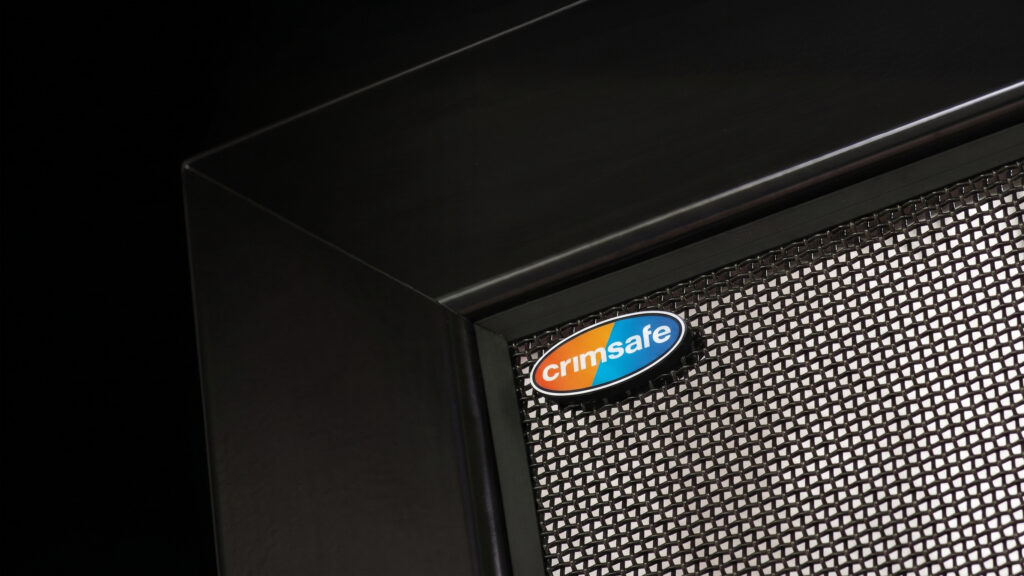
Crimsafe's mesh has passed the knife shear test, resisting a continuous cut longer than 150mm from a trimming knife, and University of Queensland testing found Crimsafe withstands 550kJ of impact for the Regular range and 750kJ for the Ultimate range, 5.5 times the current Australian Standard. That is independent, third-party testing, not a manufacturer's claim taken on faith.
Relative intruder resistance, illustrative comparison. Impact figures for Crimsafe from independent University of Queensland testing.
Mesh Type Comparison
| Product type | Typical mesh | Intruder resistance |
| Fibreglass security screen | Fibreglass | Minimal |
| Aluminium security screen | Aluminium | Low |
| Crimsafe security screen | 0.9mm 304-grade stainless steel | Independently tested, 5.5x Australian Standard impact resistance |
Why A Screen That Looks Secure Is Not Always Tested To Be
This is the part that catches people out. A screen can have a solid-looking frame, a mesh pattern that appears fine, and even a lock that clicks shut, and still fail the first time real force is applied. Appearance is not proof. The only real proof is independent testing against a recognised standard, backed by a manufacturer warranty that actually stands behind the claim.
How To Check Whether An Existing Screen Still Offers Real Protection
A quick way to assess an existing screen at home: press firmly on the mesh near the centre of a panel. Genuine stainless steel security mesh will have very little give. A standard security screen will flex noticeably, and in some cases you can push a finger through it. Also check the frame for visible external screws, and check whether the door has a single lock point or a more robust locking system.
Signs of genuine security mesh
- Very little give when you press firmly on the centre of a panel
- No visible external screws holding the mesh in
- A multi-point locking system, not a single latch
- Comes with a stated warranty backed by independent testing
Signs your screen is only a barrier
- Noticeable flex, or you can push a finger through the mesh
- Visible screws or rivets on the outside face
- A single latch or lock point holding the whole door shut
- No mention of testing to a recognised Australian Standard
A Simple Three-Step Process
- Check: press on the mesh, check the lock, and look for visible external fixings on your current screens.
- Compare: weigh what you find against a genuine, independently tested security screen like Crimsafe.
- Upgrade: book a free measure and quote with a licensed Crimsafe installer if your current screens fall short.
What Upgrading From A Standard Screen To Crimsafe Involves
Upgrading is more straightforward than most homeowners expect. Securelux measures each opening, whether that is a hinged door, a sliding door, a stacker configuration, or a window, and manufactures Crimsafe to fit. The full range, from Crimsafe First through to Ultimate, plus 3M security film and shutters, means there is an option to suit different budgets and different levels of protection, without sacrificing airflow, light, or the view.
Why Installation Quality Closes The Gap Standard Screens Leave Open
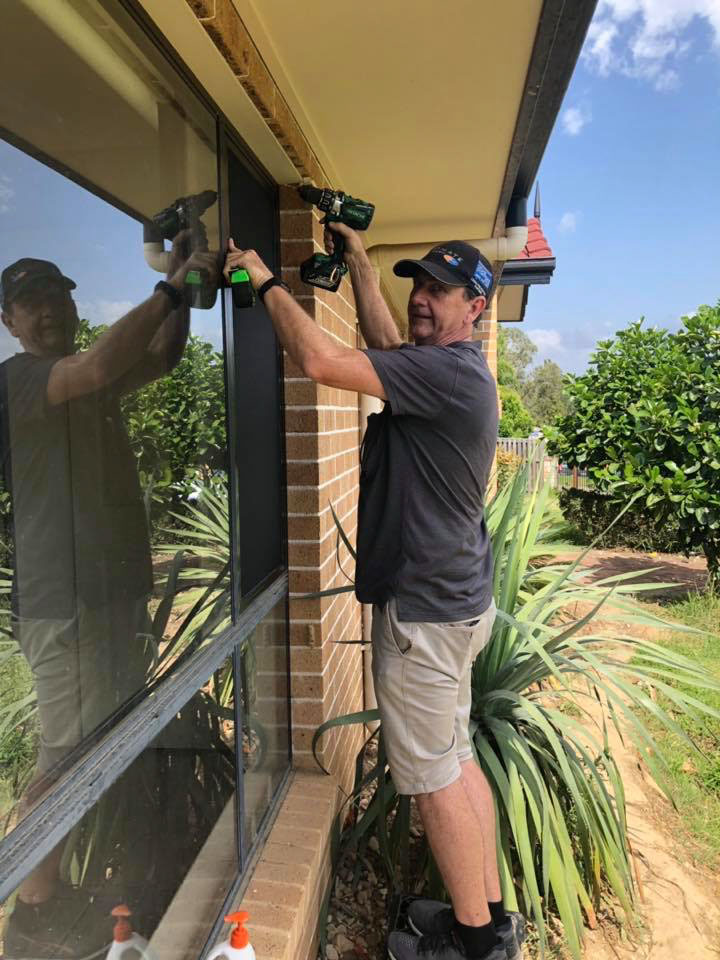
Even Crimsafe's stainless steel mesh depends on correct installation to perform as tested. Securelux uses its own employed installers, not subcontractors, applies Saltwater Series gel to every clamp screw to guard against corrosion in Brisbane's coastal conditions, and fits colour-matched, heavy-duty accessories on every job. That combination, genuine tested mesh plus a properly squared and fitted frame, is what actually closes the gap that standard screens leave wide open.
Why This Distinction Matters More As Homes Get Renovated
More Brisbane homeowners are opening up their living spaces with larger sliding doors, servery windows and outdoor entertaining areas, which means more glass, more openings and more places where a security screen might have quietly been doing a security screen's job for years. Every time a home is renovated or extended, it is worth treating that as a natural checkpoint to reassess which openings are covered by a genuine security screen and which are still relying on a standard security screen for protection they were never designed to provide.
Standard Screens vs Genuine Security Screens, Quick Answers
What is the difference between a security screen and a barrier door?
Can Crimsafe be cut with a knife?
Is an aluminium security screen enough to stop a break-in?
How do I check if my current screen is genuine security mesh?
What standard should a genuine security screen be tested to?
Choosing A Screen Built For Brisbane Conditions, Not Just Appearances
Brisbane and Gold Coast homes face humidity, storm season and salty coastal air, on top of the everyday risk of an opportunistic break-in. A standard security screen was never built for either challenge. If your current screens are more about appearance than actual protection, it is worth getting them properly assessed. Book a free Crimsafe consultation with Securelux at securelux.com/book-consultation/ or call 1300 11 51 51, and find out where your home might still be relying on a barrier screen doing a security screen's job.
Curious how your own screens would hold up, or want to share what you found when you checked them? Leave a comment below, we are always happy to talk through it.




Leave A Comment