


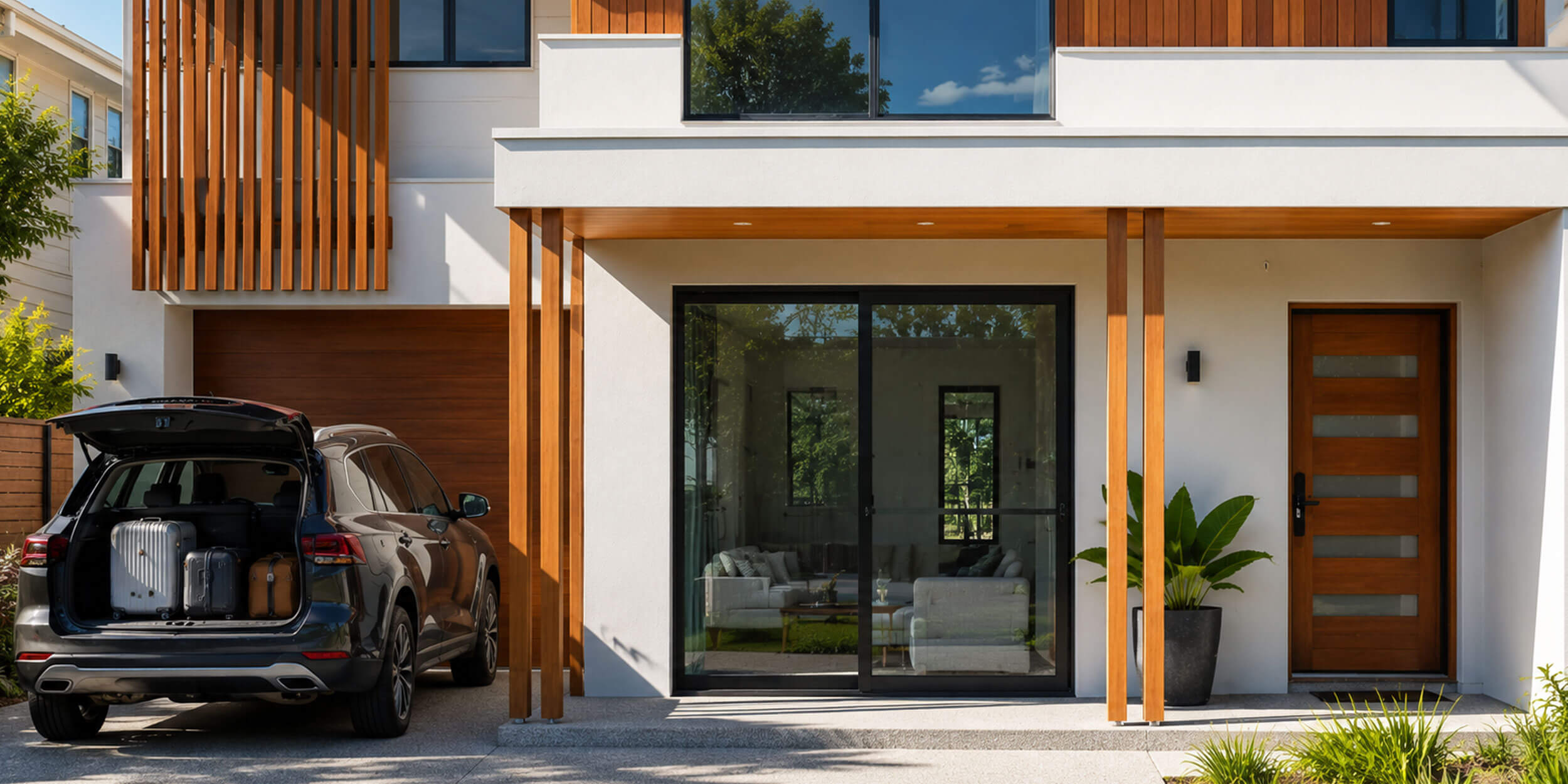
Planning Crimsafe into a new home from the start is usually easier, cleaner, and more cost-effective than treating security screens as an afterthought. The biggest advantage is not simply having screens installed sooner. It is being able to coordinate openings, tracks, handles, frame colours, door swings, and access requirements while the builder and designer can still make practical adjustments. For homeowners who want security without making a new home feel closed in, that early coordination can make a noticeable difference to both the finish and the way the house works every day.
Why Security Is Easier to Plan Than to Retrofit
A finished home gives an installer a fixed set of dimensions, clearances, and hardware to work around. A home still on the drawing board gives the project team options. That means sliding door tracks can be considered alongside the security screen, hinged doors can be planned so handles and closers do not clash, and large openings can be divided into practical panels before construction locks the design in.
Retrofitting is still possible in many homes, but early planning reduces compromises. It can also help avoid a situation where the security screen ends up looking like an extra layer added after the architectural details were already resolved.
What to Raise With Your Builder or Architect Early
The useful conversation is not simply, "We want Crimsafe." Start with how each opening will be used. A front entry, a stacker opening to the patio, and a bedroom window all have different priorities.
Ask the builder or architect to confirm:
- The final opening sizes and frame systems
- Door swing directions, handle positions and threshold details
- Whether the opening has bushfire, fall-prevention or other compliance requirements
- The intended colour schedule for windows, doors and external hardware
- When final site measurements can be taken without delaying the construction program
That information gives the security-screen supplier something useful to design around instead of making assumptions from preliminary plans.
Designing Hinged, Sliding and Stacker Openings Around Crimsafe
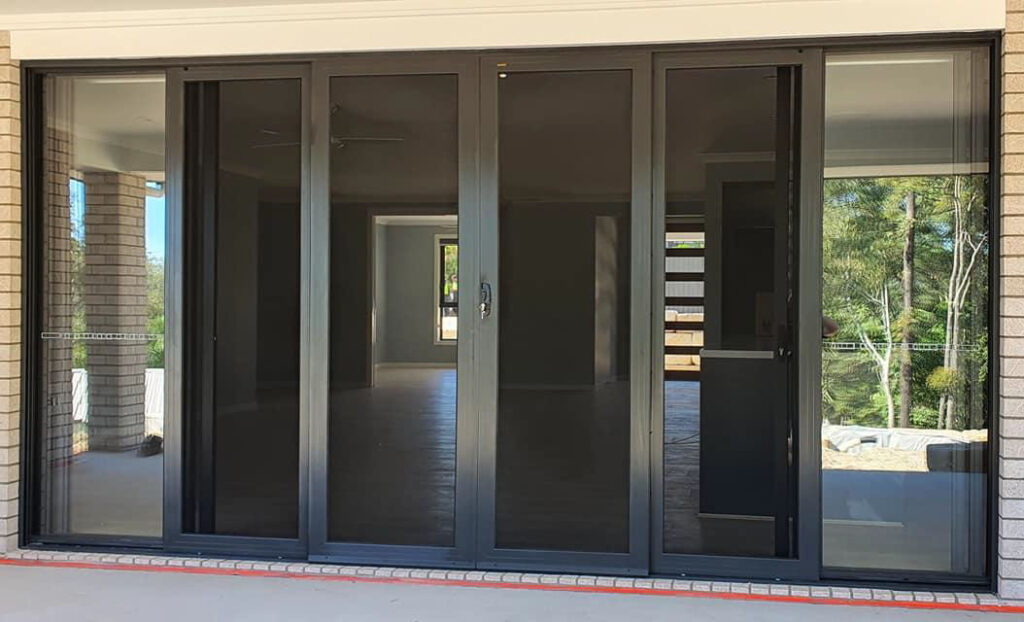
Different openings create different installation challenges. A hinged security door needs suitable fixing points, hinge clearances, and enough room for the door to open without hitting walls, steps, or nearby joinery. Sliding systems need tracks that allow the security panel to travel and lock correctly. Stacker doors add another layer because the number and direction of panels affect how the opening is used.
Crimsafe systems are made to measure, so there is flexibility, but made-to-measure does not mean every design decision can be postponed. Large openings in particular benefit from early discussion because panel widths, meeting stiles and locking positions affect both usability and appearance.
Keeping Open-Plan and Indoor-Outdoor Living Secure
Modern Queensland homes often rely on wide openings between living areas and patios. The goal is usually to preserve airflow and the feeling of one connected space while still being able to secure the home.
Security screens can support that approach because they do not require solid shutters or bars across the opening. However, the entire opening still needs to work as a system. A secure panel is only useful when the frame, lock, track, and surrounding structure are suitable for it.
For an indoor-outdoor area, think about traffic flow as well as security. If people constantly move between the kitchen, pool, and patio, a configuration that is awkward to slide or latch will quickly become frustrating.
Budgeting for Security Screens as Part of the Build Cost
Security screens are easier to budget when they are included in the finishes schedule rather than left for the last few weeks of the build. Pricing depends on opening size, configuration, hardware, finish, and the Crimsafe range selected, so a generic per-square-metre allowance can be misleading.
A better approach is to identify the priority openings early and obtain a site-specific or plan-based estimate. Some homeowners choose a higher specification on front entries and large living-area openings, then use another Crimsafe option elsewhere. That can keep the overall budget focused on the places where strength, appearance, or traffic levels matter most.
Colour and Frame Choices That Suit a New Home's Design
Security screens should be part of the colour conversation, not added once every other finish has been selected. Matching or deliberately coordinating the screen frame with window frames, door joinery and external trims gives the finished home a more resolved look.
For contemporary builds, small details matter. The internal view of the frame, hardware colour and alignment with adjacent glazing can be just as important as the exterior. Ask to see physical colour samples where possible because screen, paint and aluminium finishes can look different in direct sunlight compared with a showroom.
Fitting Crimsafe Into Bushfire and Cyclone-Rated Builds
Security is only one requirement in a new build. Bushfire-prone and high-wind sites may have additional construction rules that affect windows, doors and screens. Crimsafe publishes specific bushfire and resilience applications, including systems designed for use with compliant window assemblies in bushfire conditions. That does not mean every Crimsafe screen automatically satisfies every project requirement.
The builder, architect, certifier or engineer should identify the applicable requirements for the site. The security-screen specification can then be matched to those requirements. For bushfire work, this is especially important because the performance of the overall opening matters, not just the mesh.
Balustrading, Fall Prevention and Multi-Storey Considerations
Upper-level windows need more than a general security conversation. Depending on the opening height, sill height and use of the room, fall-prevention requirements may apply under the National Construction Code and relevant Australian Standards.
Do not assume a security screen automatically doubles as a compliant fall-prevention barrier. The exact product, fixing method and application need to be appropriate for the required use. If an architect or certifier has nominated a performance requirement, provide that information to the installer before manufacture.
The same principle applies to balustrade-like applications. Security, fall resistance and balustrading are related but distinct design problems.
Coordinating Measure and Install Around the Build Schedule
The most useful time for an initial discussion may be early, but final manufacture generally depends on reliable finished dimensions. Measuring too soon can create problems if frames, tiles, floor finishes or thresholds later change the opening.
A Simple Three-Stage Plan
| Stage | What happens | Why it matters |
|---|---|---|
| 1. Plan | Review drawings, opening types, and project requirements | Identifies conflicts before construction is advanced |
| 2. Measure | Confirm final site dimensions when frames and levels are ready | Gives the manufacturer accurate information |
| 3. Install | Fit and test screens once surrounding work is sufficiently complete | Reduces the chance of damage and rework |
Your builder should also allow access for the installer and make sure wet trades, painting or other work will not immediately damage the finished screens.
Common Mistakes Owner-Builders Make With Security Screens
- Leaving the decision until practical completion and assuming every opening will accept the preferred configuration
- Choosing a screen purely from a brochure without checking how the door will actually move, lock and sit against the finished frame
- Ordering from preliminary dimensions, when a few millimetres can matter on a made-to-measure product
- Letting a strong screen become the only security conversation, rather than one part of locks, lighting, glazing, access control and day-to-day habits
Working With a Crimsafe Authorised Licensee During Construction

Using a Crimsafe Authorised Licensee gives the builder and homeowner a clear point of contact for the Crimsafe system being specified. The licensee can explain the differences between available ranges, assess the physical openings, and provide the details needed for fabrication and installation.
Securelux is a Crimsafe Authorised Licensee and QBCC licensed security-screen installer serving South East Queensland. Its installers are direct employees rather than subcontractors. For a new build, that means the same business can be involved from early product discussion through measurement, installation and after-service.
The installer should still work with the project team rather than around it. Where a certifier, engineer, or architect has issued a requirement, that project documentation should guide the final specification.
Getting a Free Consultation Before Your Build Starts
The best time to ask security-screen questions is before the drawings and selections are impossible to change. A consultation can identify which openings deserve priority, which Crimsafe range is likely to suit each one, and what information the builder will need to provide later.
Bring plans, elevations and the window-and-door schedule if you have them. You do not need every finish locked in to start the conversation. The goal is to make sure security is being designed into the house rather than squeezed in at the end.
For homeowners building in South East Queensland, Securelux can review the proposed openings and explain the practical options before final measurements are taken. That early step can save rework, keep the finished result cleaner, and make it easier to balance security, airflow, appearance and budget from day one.
Planning Crimsafe Into A New Build, Quick Answers
When should I start talking to a security screen supplier during a new build?
Should security screens be budgeted separately from the rest of the build?
Does Crimsafe automatically meet bushfire or fall-prevention requirements?
When should final measurements be taken on a new build?
What is the most common mistake owner-builders make with security screens?
Book a free consultation with Securelux at securelux.com/book-consultation/ or call 1300 11 51 51, and bring your plans, elevations and window-and-door schedule if you have them.



Leave A Comment