


A home security screen is only as dependable as the parts that hold the whole opening together. Homeowners often look at the mesh first, yet the frame, corners, screws, hinges, locking points, and installation can decide how well a door or window actually resists forced entry. That matters after a break-in nearby, when an old flyscreen starts rattling, or when you simply want to leave a door open for airflow without feeling exposed. The useful question is not just "Is this a security screen?" It is "Where could this opening fail first?"
What Counts as a Weak Point in a Door or Window
A weak point is any part of the opening that can give way before the main screen does. That may be a loose frame, worn hinge, shallow receiver, damaged lock, corroded fastener, or poor fixing into the surrounding building structure. Sometimes the obvious-looking component is not the problem at all. A strong screen fitted to a weak or damaged frame can still leave the opening vulnerable. A proper inspection should look at the complete system, including the substrate the screen is fixed to, not just the visible mesh.
Flyscreen or Security Screen: Why the Difference Matters
A flyscreen is designed primarily to keep insects out. A genuine security screen is designed and tested to resist specific forms of attack. That distinction sounds simple, but it is easy to lose in marketing language. In Australia, security screen performance is assessed against relevant requirements in AS 5039, with test methods covering attacks such as impact, jemmying, pulling, probing, and knife shear. If a product is sold as a security solution, ask what complete door or window configuration was tested, not whether the mesh itself "looks strong".
The Three Standards, At A Glance
| Standard | What it covers |
|---|---|
| AS 5039 | Performance requirements for security screen doors and security window grilles |
| AS 5041 | Test methods, including dynamic impact, jemmy, pull, probe, shear and knife shear testing |
| AS 5040 | Installation requirements for security screen doors and security window grilles |
Passing a standard does not make every product identical, but it gives you a baseline to ask any installer to demonstrate.
How Frame and Corner Construction Affects Strength
The frame has to manage the force that reaches it when the screen is hit, pulled or levered. Corners deserve particular attention because they connect the rails and stiles that keep the opening square. If those joints flex excessively, crack, separate or have been poorly repaired, the rest of the system can be compromised. Look for movement when the door opens and closes, gaps that were not there before, or corners that no longer sit neatly. A frame should feel stable without being distorted by the installation.
Screws, Rivets, and Clamps: What Actually Holds Up
Fasteners are easy to ignore because most of them are small, repetitive, and partly hidden. They are also doing a lot of work. The spacing, type, and placement of screws, rivets, or clamps affect how forces are transferred from the mesh into the frame. A screen with impressive material specifications can still underperform if its retention system is poorly designed or incorrectly assembled. Crimsafe, for example, uses a perimeter Screw-Clamp system with tamper-resistant screws. The more useful comparison is how the whole retention system has performed in independent testing.
Why Hinges and Locking Points Get Overlooked

Homeowners naturally focus on the broad face of a security door, but an intruder is more likely to look for leverage around the edges. Worn hinges, loose hinge screws, door sag, and misaligned locks can create gaps that make levering easier. On a hinged door, check that it closes cleanly without lifting or forcing the handle. On sliding doors, check rollers, guides, interlocks, and the way the panel meets the jamb. A multi-point lock only helps when every locking point engages properly with a sound frame.
How Coastal Air Speeds Up Corrosion in Hardware
South East Queensland homes can be hard on metal hardware, especially closer to the coast. Salt carried in the air can settle on frames, fasteners, locks and other fittings, while humidity keeps surfaces damp for longer. Corrosion often starts in small places that are easy to miss, such as around screw heads, hinge joints, or drainage points. Regular rinsing and cleaning in line with the manufacturer's care instructions can make a real difference. If a home is exposed to salt air, ask what maintenance schedule applies before choosing a system.
Signs Your Current Screens Are Already Compromised
You do not need specialist tools to spot every early warning sign. Walk around the home and look closely at the openings you use most.
Signs worth having assessed
- Rattling frames, sagging doors, or locks that need extra force to engage
- Corrosion, staining, missing fasteners, bent mesh, or gaps around the frame
- Rubbing, lifting, dragging, or shifting when a screen opens and closes
- Loose latches or movement around the frame on accessible windows
- Older repairs that may not have restored the original security performance
What a sound opening looks like
- Frame sits square with no rattling or visible movement
- No corrosion, staining, or missing fasteners around the fixings
- Doors and windows open and close cleanly with no drag
- Locks and latches engage firmly on the first try
- Any past repairs were assessed against the original standard, not just patched
A small problem is usually easier to correct before it turns into a damaged frame or unreliable locking point.
Why Installation Quality Matters as Much as the Product
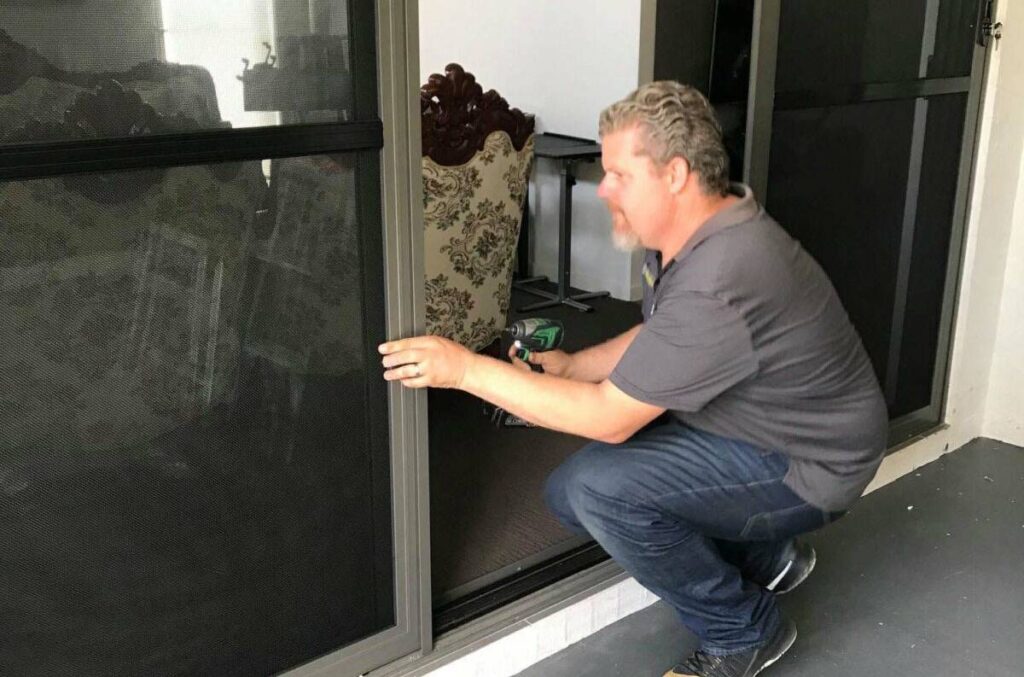
The product and the installation work as one system. Measurements need to be accurate, the frame needs adequate fixing points, locks need to line up, and the surrounding opening needs to be suitable for the load the screen may experience. Even a tested security product cannot reproduce laboratory performance if it is fitted outside the conditions for which it was designed. This is one reason to ask whether the installer is trained for the specific system and whether the completed work is being installed in accordance with the relevant standard and manufacturer instructions.
Five Questions to Ask an Installer Before You Sign
A good consultation should make the technical details easier to understand, not bury you in brand language.
- Which Australian Standards does this complete door or window system meet?
- How is the mesh retained in the frame, and what testing supports that design?
- What will you check about my existing door or window opening before installation?
- What maintenance is required for my location, especially if the property is near the coast?
- Who will install the product, and what workmanship and product warranties apply?
The answers should be specific enough that you can compare quotes on more than price.
How Crimsafe Addresses These Common Weak Points
Crimsafe's residential ranges use a perimeter Screw-Clamp system rather than relying on the mesh alone.
Those figures are useful, but they still need to be matched with the right frame, lock configuration, opening, and installation for the home.
A Simple Three-Step Check
| Step | What to do |
|---|---|
| 1. Inspect the opening | Look for movement, corrosion, gaps, and worn locks before choosing a replacement. |
| 2. Check the evidence | Ask for the standards, test results, warranty terms, and maintenance requirements for the exact system. |
| 3. Check the installation | Confirm who will measure, manufacture and fit the screen and how the opening will be prepared. |
What a Free Measure and Quote Actually Involves
A useful measure and quote is more than someone writing down a width and height. The consultant should inspect the opening, discuss how the door or window is used, identify any access or hardware issues, talk through the suitable product range, and explain finish, lock, and maintenance options. It is also the right time to raise pets, children, airflow, coastal exposure, or renovation plans. Securelux offers consultations across its South East Queensland service area, allowing homeowners to compare the practical differences before deciding what level of security makes sense for each opening.
Weak Points and Standards, Quick Answers
What is the difference between a flyscreen and a security screen?
What do AS 5039, AS 5041 and AS 5040 actually cover?
Can a good security screen still fail if the frame is weak?
Why does coastal air matter for security screen hardware?
What impact resistance does Crimsafe offer compared to the standard?
The hidden weak points in a home are rarely dramatic. They are usually small details that have loosened, corroded, shifted, or been overlooked over time. Checking them early gives you a clearer picture of what actually needs attention and stops the purchase decision from becoming a simple contest between brand names. If you are unsure where to start, inspect the most accessible doors and windows first, then have any questionable openings assessed by a qualified security screen installer before relying on them as part of your home's security.
Book a free measure and quote with Securelux at securelux.com/book-consultation/ or call 1300 11 51 51.



Leave A Comment